Importance of Long-Tail Keywords For SaaS SEO: How They Drive Qualified Demos, Not Just Traffic
High-traffic SaaS blogs often fail to generate demos because they target broad, informational keywords instead of focusing on the importance of long-tail keywords for SaaS SEO. While these keywords improve visibility and impressions, they attract readers who are researching casually, not evaluating SaaS solutions. As a result, SEO performance looks strong on paper, but demo requests and sales pipeline remain weak.
This creates a clear gap between rankings and revenue in SaaS SEO. Ranking for popular terms does not guarantee buying intent. Without aligning keywords to real SaaS pain points, use cases, and decision-stage queries, content drives traffic but fails to move prospects closer to conversion.
This is where the importance of long-tail keywords for SaaS SEO comes in. Long-tail keywords capture high-intent searches from buyers who know their problem and are looking for solutions. By focusing on traffic quality over traffic volume, SaaS companies generate fewer visits but more qualified demos and meaningful sales conversations.
What Are Long-Tail Keywords in SaaS SEO
Long-tail keywords in SaaS SEO are highly specific search phrases that reflect a clear problem, use case, industry, or buyer role. Unlike broad head keywords that attract mixed intent traffic, long-tail keywords align closely with how real SaaS buyers search when they are closer to decision making. This is why the importance of long-tail keywords for SaaS SEO lies in driving qualified demos, not just page views.
Head keywords vs long-tail keywords in SaaS
- Head keyword example: CRM software – Broad, high volume, low buying intent, highly competitive
- Long-tail keyword example: CRM for healthcare startups – Specific, lower volume, high intent, clear use case and audience
Why SaaS buyers search with specific problems and roles
- SaaS buying decisions are complex and role driven
- Buyers search based on their industry, job function, and pain points
- Queries reflect readiness to compare tools, not just learn concepts
- Long-tail searches signal intent to evaluate, shortlist, or request demos
Understanding your ideal SaaS buyer’s mindset is the foundation of long-tail keyword success. Learn how to build customer personas that power intent driven SEO here.
Importance of Long-Tail Keywords for Your SaaS
Long-tail keywords play a direct role in turning SEO traffic into revenue. The importance of long-tail keywords for SaaS SEO lies in their ability to attract buyers who are already problem aware, solution aware, and closer to requesting a demo.
1. Long-Tail Keywords Capture High-Intent SaaS Buyers
Long-tail keywords attract users who are already aware of their problem and are actively looking for a solution. These searches often signal demo ready or solution aware intent because the buyer has moved beyond generic research.
- Searches combine problem + use case + role or industry
- Indicates the buyer is comparing tools, not learning basics
For instance, if you are a CRM SaaS targeting “CRM software” attracted students and early researchers. When they shifted to “CRM for real estate brokers managing multiple listings”, traffic dropped by 40 percent but demo requests increased because visitors matched the actual buyer persona.
2. Higher Conversion Rates Compared to Broad Keywords
Because long-tail keywords match precise intent, users spend more time on the page and engage with CTAs. This naturally leads to lower bounce rates, stronger lead generation, and higher demo or free trial conversions.
- Content feels personalized, not generic
- Messaging aligns with a specific pain point and workflow
For instance, if you are a project management SaaS user, create two pages: one for “project management tools” and another for “project management software for remote product teams”. The long-tail page converted 2.8x higher because it spoke directly to daily collaboration challenges faced by product managers.
For SaaS leaders deciding how to resource long-tail keyword strategy and content execution, see our breakdown of choosing between a SaaS marketing agency and an in-house team.
3. Faster Rankings in Competitive SaaS Niches
Broad SaaS keywords are dominated by large brands with strong backlink profiles. Long-tail keywords allow new and mid-stage SaaS companies to enter SERPs faster with high quality, intent focused content.
- Lower keyword difficulty
- Less reliance on backlinks in early stages
For example, if you are an HR SaaS company struggling to rank for “HR software”. By targeting “HR software for startups hiring remote engineers”, they reached page one within weeks and started generating inbound demo inquiries without aggressive link building.
4. Better Alignment With Revenue Metrics, Not Vanity Traffic
Long-tail keyword driven content is easier to map to revenue metrics like SQLs, opportunities, and pipeline influenced content. Instead of celebrating sessions, SaaS teams measure impact on sales conversations and improve results further through CRO services that optimize conversions across key SaaS pages.
- Focus on SQLs over raw traffic
- Content supports sales enablement and pipeline growth
For instance, if you are a B2B analytics SaaS tracked demo conversions by landing page and found that long-tail blogs influenced 60 percent of closed deals, while high-traffic blogs contributed almost no pipeline value.
Long-tail keywords perform best when supported by the right channel mix. Explore the most effective marketing channels for SaaS in 2026 and how they work together.
How Long-Tail Keywords Drive Qualified SaaS Demos
Long-tail keywords turn SEO into a predictable demo generation channel by aligning search intent with funnel stage and page purpose. Instead of chasing volume, SaaS teams capture buyers when they are ready to evaluate, compare, and convert.
Mapping Long-Tail Keywords to SaaS Funnel Stages
This format works very well for SaaS SEO and sales alignment.
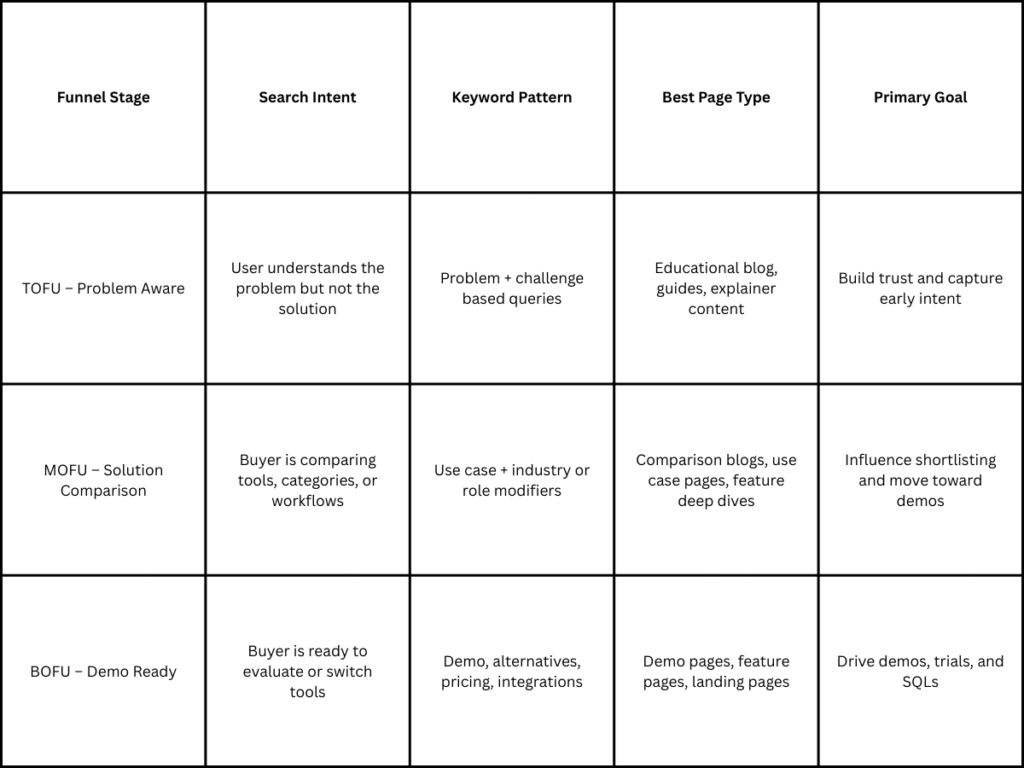
Once long-tail keywords are aligned to funnel stages, SaaS teams can design content and pages that guide buyers naturally toward demos and sales conversations.
Why this matters for SaaS teams:
Mapping long-tail keywords to funnel stages ensures every page has a clear revenue purpose. Instead of publishing content for traffic alone, SaaS companies create intent matched pages that support sales conversations and drive qualified demos.
Why Demo Pages and Feature Pages Need Long-Tail SEO
- Generic landing pages speak to everyone and convert no one
- Intent matched pages mirror the exact problem and use case searched
- Long-tail keywords allow personalized messaging at scale
To show proof of how long-tail keyword content drives real demo growth, learn how to use case studies in SaaS content marketing and turn stories into conversions.
How to Find Long-Tail Keywords for SaaS SEO
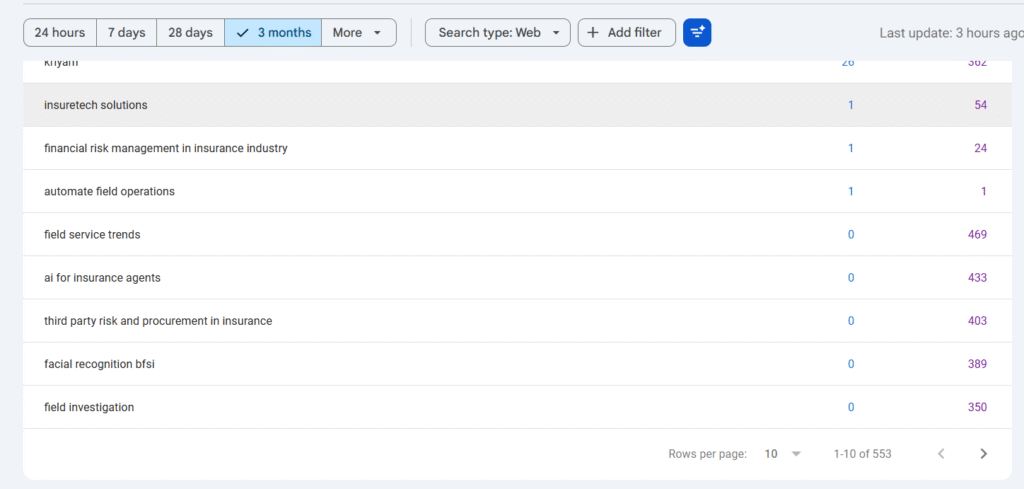
- Google Search Console – Analyze queries already driving impressions but low clicks. These often reveal long-tail, problem aware searches your SaaS is partially visible for but not fully optimized.
For example, the queries shown in the below image highlight problem focused and industry specific searches your SaaS already appears for but has not fully optimized around buyer intent.
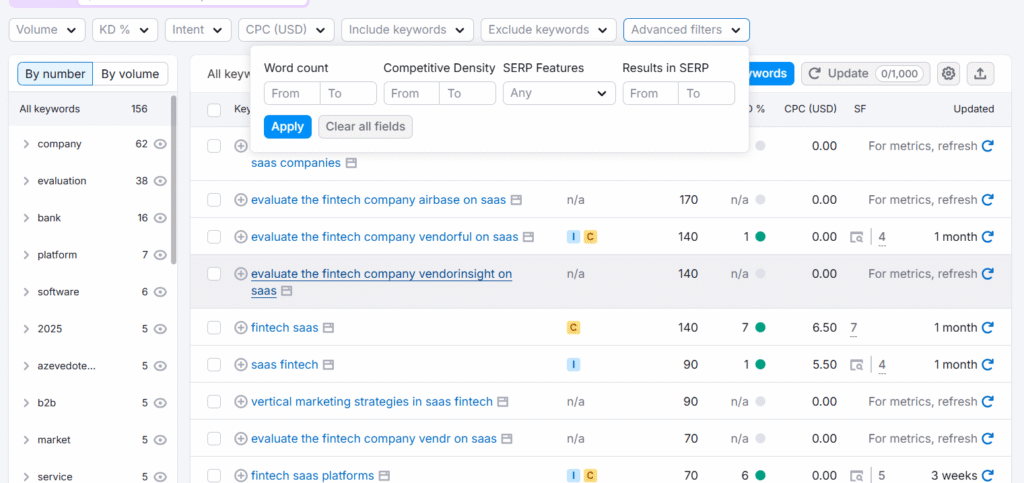
- Ahrefs and Semrush intent filters – Use filters like “questions,” “comparisons,” and “commercial intent” to surface solution comparison and demo ready long-tail keywords.
For example, this Semrush view shows how using intent filters like comparisons, evaluation, and commercial intent, along with word count and competitive density filters, helps surface demo ready and solution comparison long-tail keywords.
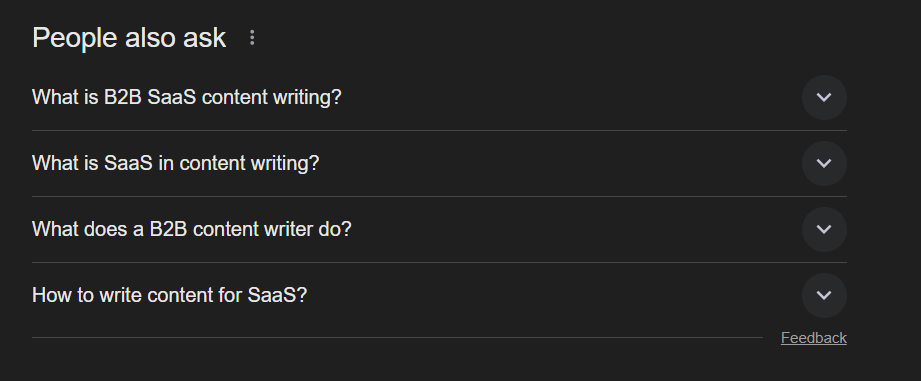
- People Also Ask and Related Searches – These sections show how buyers refine their search. They are excellent for uncovering role based and use case driven keyword variations.
For example, the People Also Ask section shows how buyers refine their queries into role based and use case focused questions, making it a strong source for discovering long-tail keyword variations.
Finding Long-Tail Keywords Competitors Miss
- Analyze feature gaps – Identify features your SaaS does well but competitors do not explain clearly. Turn these into long-tail keywords around specific workflows or outcomes.
- Industry and role specific content gaps – Most competitors target generic SaaS audiences. Create keywords focused on industries, team sizes, and job roles they ignore, such as “analytics for SaaS product managers” or “CRM for founder led startups.”
This approach ensures your long-tail keyword strategy attracts buyers your competitors overlook, increasing demo quality without competing purely on volume.
If your goal is to turn long-tail SEO into influence and trust with buyers, explore how to build thought leadership through content marketing in SaaS.
How to Target Long-Tail Keywords for B2B SaaS Content
Targeting long-tail keywords effectively is where SaaS SEO turns into a revenue engine. The goal is not just ranking, but aligning content with buyer intent, use case clarity, and conversion paths.
Writing SaaS Content That Matches Search Intent
To win with long-tail keywords, your content must mirror exactly what the buyer is searching for.
- Problem framing – Start by clearly naming the problem the buyer is experiencing. This builds instant relevance and reduces bounce rate because users feel understood.
- Use case clarity – Specify who the content is for, such as industry, role, or team type. Long-tail keywords work best when readers immediately see themselves in the solution.
- Outcome driven messaging – Focus on results, not features. Buyers search long-tail queries because they want outcomes like faster onboarding, better reporting, or higher conversions.
On-Page SEO Best Practices for Long-Tail Keywords
Strong on-page SEO ensures search engines and users understand page relevance.
- Title tags and H1 alignment – Include the long-tail keyword naturally in both the title and H1 to reinforce topical focus.
- Natural keyword placement – Use keywords in introductions, subheadings, and body copy without forcing repetition. Clarity always beats density.
- Conversion focused CTAs – Match CTAs to intent. Educational pages push demos softly, while BOFU pages drive direct demo or trial actions.
Internal Linking Strategy to Push Demo Pages
Internal linking connects traffic to revenue.
- Blog to BOFU page linking – Contextually link problem aware and comparison blogs to relevant demo or feature pages.
- Content clusters for authority building – Group TOFU, MOFU, and BOFU content around a core topic to build topical authority and improve demo page rankings.
This approach ensures long-tail keywords for B2B SaaS content attract qualified buyers, guide them through the funnel, and convert traffic into demos instead of dead ends.
If you want a structured way to plan long-tail keyword topics and align them with buyer intent, see our step-by-step guide on building an editorial calendar for SaaS.
Why SaaS Companies Partner With Radian Marketing for Long-Tail SEO
SaaS companies partner with Radian Marketing because long-tail SEO is executed as a revenue system, not a keyword exercise. The focus stays on attracting the right buyers, at the right stage, with content that drives demos and pipeline growth.
This exact approach has been implemented for nected.ai.
Persona Driven Keyword Research
- Built around real SaaS buyer personas, not generic keyword lists
- Focused on how users search for microsoft business rules engine, what is rule-based process, and business decision management system
- Mapped keywords to technical and business roles, industries, and decision triggers
- Attracted decision makers actively evaluating rule based automation platforms
Funnel Mapped Content Strategy
- TOFU content explains core concepts like what is rule-based process and decision automation fundamentals
- MOFU content targets evaluation intent searches such as microsoft rules engine example and platform comparisons
- BOFU content focuses on demo driven and implementation focused keywords
- Ensures SEO supports the full SaaS buyer journey, not just traffic metrics
Conversion Optimized SaaS Pages
- Implemented long-tail keywords like microsoft business rules engine and business decision management system across demo and feature pages
- Messaging aligned with real world use cases and intent matched pain points
- Clear CTAs drive demos, improve SQL quality, and connect SEO directly to revenue
Conclusion: Long-Tail Keywords Turn SaaS SEO Into a Revenue Channel
In SaaS, traffic alone does not equal growth. High rankings and large session numbers mean little if visitors are not ready to evaluate or buy. When SEO focuses only on broad keywords, it creates visibility without pipeline impact.
Long-tail keywords change this by connecting SEO directly to demos and sales conversations. They capture buyers searching with clear problems, roles, and use cases, allowing SaaS content to attract decision makers instead of browsers. This is where the true importance of long-tail keywords for SaaS SEO shows up in measurable results like SQLs and demo conversions.
For growing SaaS companies, long-tail SEO is also the fastest way to compete with bigger brands in SaaS marketing. Instead of fighting for crowded head terms, SaaS teams win by owning specific, high-intent searches that drive revenue, not vanity traffic.