


How Google’s New AI Model (ALF) Is Transforming Google Ads in 2026 – What Marketers Must Know
The digital advertising landscape is evolving faster than ever, and artificial intelligence sits at the heart of that change. In early 2026, Google quietly rolled out a new AI system within its Google Ads Safety ecosystem that promises to dramatically improve how fraudulent or policy-violating advertisers are detected and managed.
In this article, we’ll break down what Google ALF is, why it matters to marketers and brands, and how you can adapt your paid media strategy for this new era of AI-powered policy enforcement. We’ll also analyze the implications of this update for performance marketers, brand safety, and business-focused PPC campaigns.

What Is Google ALF? A High-Level Overview
Google’s latest innovation, the Advertiser Large Foundation Model (ALF), is a multimodal AI system designed to understand advertiser behavior and intent, not just individual elements in isolation, but patterns across many types of signals simultaneously.
This capability goes far beyond what older rule-based or isolated models could achieve. ALF processes text, images, video, structured account details like billing history and account age, and more, creating a holistic, unified representation of advertisers that enables drastically improved detection of fraud, policy violations, and anomalous behavior.
In fact, a recent report shared on Search Engine Journal explains that ALF has achieved over 40 percentage points better recall and 99.8% precision when identifying problematic advertisers compared with previous systems, meaning it’s both more accurate and far less likely to produce false positives.
👉 You can read more about the update here:
https://www.searchenginejournal.com/google-alf-advertiser-large-foundation-model/564510/
How ALF Works: Multimodal Understanding for Better Safety
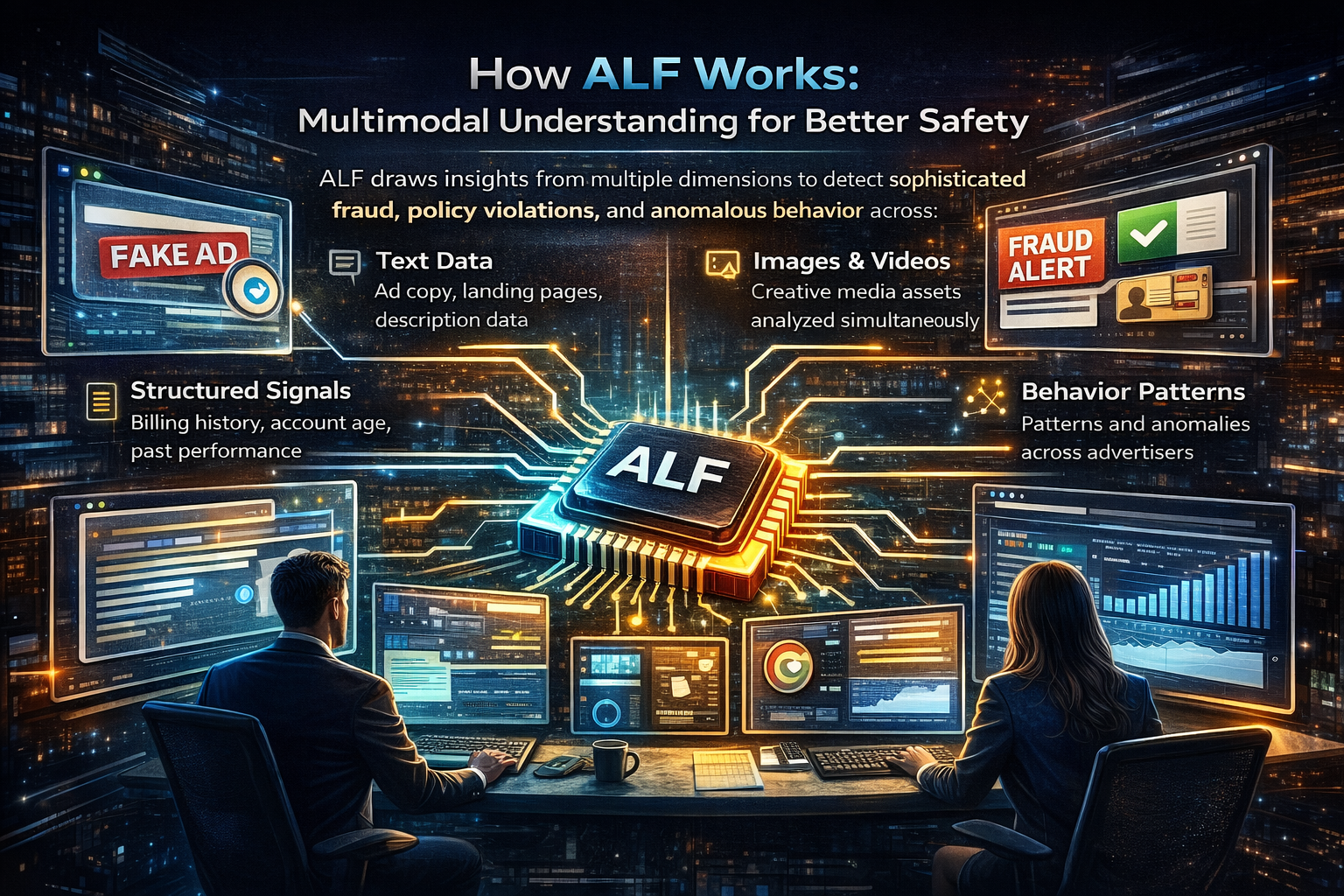
Unlike earlier systems that might look at one or two factors at a time, ALF draws insights from multiple dimensions simultaneously:
- Text data (ad copy, landing pages, descriptions)
- Creative media (images and video assets)
- Structured signals (account age, billing history, past performance)
- Behavior patterns across advertisers
This is significant because fraudulent actors often mimic legitimate behavior across individual signals but fail when patterns are analyzed holistically. For example, an advertiser might look innocent in terms of billing history but use suspicious creative assets that, when viewed together, raise red flags. ALF’s architecture is built specifically to catch these nuanced cases.
At its core, ALF uses advanced transformer-based techniques similar to what powers models like GPT but tailored for understanding advertiser behavior at scale. It also applies methods like inter-sample attention, which compares behaviors across many advertisers at once to learn what “normal” looks like.
What This Means for Marketers and PPC Campaigns
1. Reduced False Positives and Better Account Stability
One of the biggest frustrations in paid media management is when legitimate campaigns or accounts get flagged or suspended incorrectly. Overly aggressive filters used in the past led to many false positives, hurting honest advertisers unnecessarily. ALF’s higher precision means fewer legitimate advertisers are caught up in enforcement actions, giving advertisers more confidence in their day-to-day media operations.
2. Stronger Detection of Sophisticated Fraud
At the same time, ALF’s improved recall means that smarter and more complex fraudulent behaviors will be caught earlier and more reliably. This protects not only Google’s ad ecosystem but also helps preserve advertiser trust and brand safety. For agencies and brand teams, this means your clients can benefit from a safer advertising environment with fewer wasted impressions or clicks.
3. Policy Awareness Becomes Even More Critical
With more advanced detection, brands need to be extra careful about:
- Policy compliance across creative, landing pages, and messaging
- Accurate business information
- Transparent billing and account setup
- Avoiding assets or tactics that could mimic malicious behavior
Staying compliant isn’t just best practice, it’s now imperative to avoid disruption from AI-driven enforcement.
Practical Steps to Prepare Your Paid Media Strategy
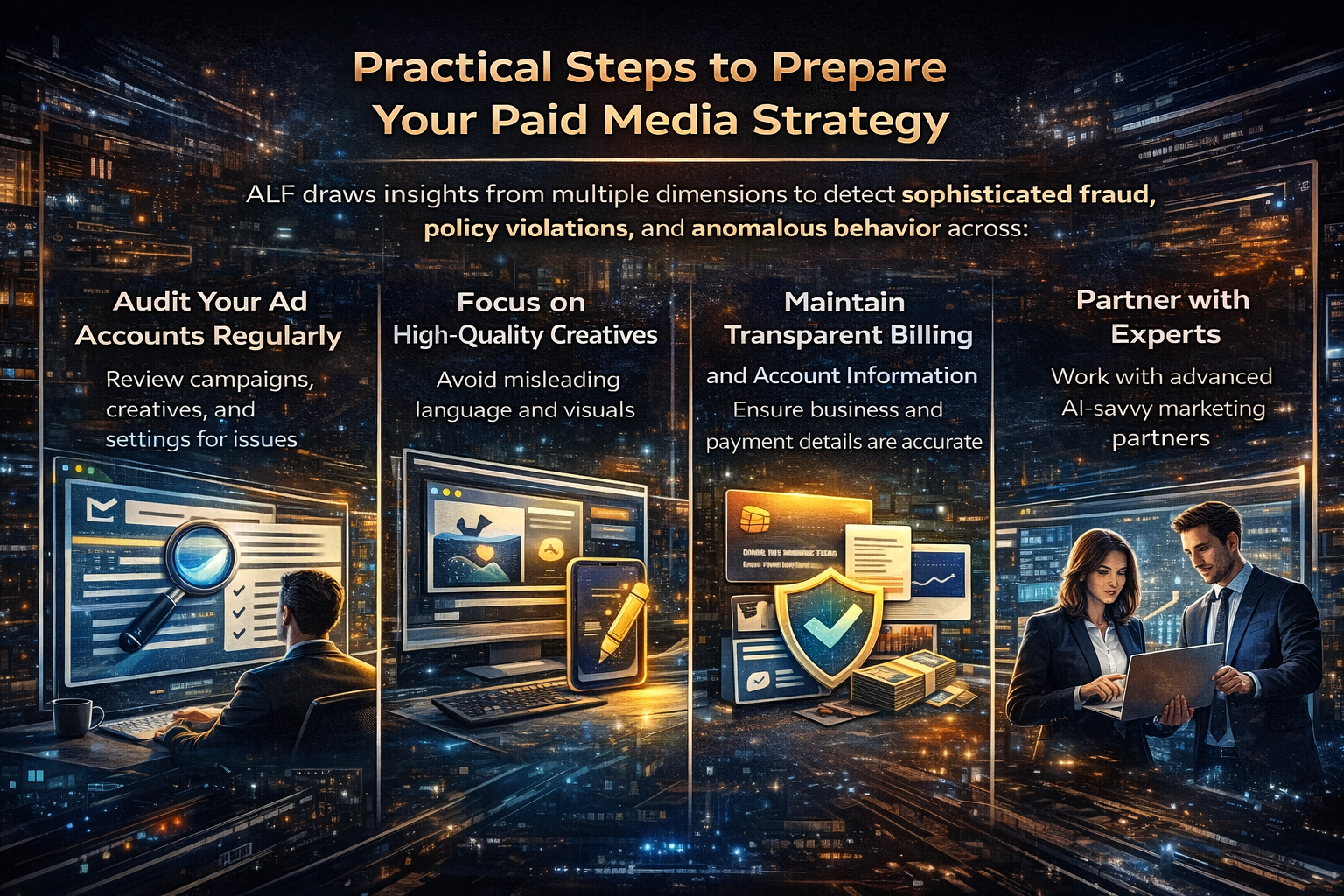
Here are actionable recommendations to adapt to the ALF-powered Google Ads ecosystem:
Audit Your Ad Accounts Regularly
Review campaigns, creatives, and account settings to ensure there’s nothing that could trigger flags in the new system.
Focus on High-Quality Creatives
Avoid ambiguous or misleading language and visuals that might confuse an AI system analyzing multimodal signals.
Maintain Transparent Billing and Account Information
Ensure that business details and payment methods are consistent and accurate; inconsistencies can sometimes appear risky to automated systems.
Partner with Experts
Working with performance marketing partners like Radian Marketing, who understand advanced AI-driven changes, can help you stay ahead in compliance, optimization, and strategy.
Broader Trends: AI in Advertising Is Here to Stay
Google ALF is not an isolated development. It signifies a larger trend across the advertising world: AI is redefining how platforms enforce policy, detect fraud, and even optimize performance. Businesses that embrace this trajectory rather than resist it will be better positioned to scale and get more predictable returns from paid media.
Here are a few other ways AI is shaping paid advertising:
- Automated bidding strategies with AI optimization
- Dynamic creative generation and personalization
- Real-time performance forecasting
- Bots and click-fraud detection systems
As these systems become more sophisticated, ad managers and performance marketers must adopt smarter data practices and advanced analytics to compete effectively.
Conclusion
Google’s Advertiser Large Foundation Model (ALF) marks a significant leap forward in how paid advertising platforms analyze, understand, and enforce policy compliance. For marketers and brands focused on performance, this update is a wake-up call to elevate compliance, focus on quality, and integrate AI-aware strategies into your media planning.
At Radian Marketing, we help brands interpret and adapt to these platform changes so you can optimize performance without sacrificing safety or compliance. AI isn’t the future — it’s already here. Your marketing strategy should be ready too.