


E-commerce Influencer Marketing: How To Do It Right in 2026
You are no longer competing just on price or ads. In 2026, e-commerce influencer marketing is how you earn trust, attention, and sales at scale by leveraging creators who turn followers into paying customers. Your customers trust creator recommendations more than traditional ads, making this strategy ideal for growing your D2C brand. In fact, 69 % of consumers take influencers at their word when it comes to product recommendations, which directly drives ecommerce interest and conversions.
What Is Ecommerce Influencer Marketing?
Ecommerce influencer marketing is when you partner with creators who actively promote your products and drive traffic directly to your online store, not just awareness. Unlike general influencer marketing, your goal is conversions, revenue, and repeat purchases, which makes it powerful for D2C brands. You can work with nano, micro, or macro influencers, creators outperform celebrities because their audiences trust their buying recommendations more.
Types of Ecommerce Influencers
Before you choose the right creator, you need to understand that not all influencers drive sales the same way for your ecommerce store. Your results depend on matching influencer size and content style with your customer’s buying behavior.
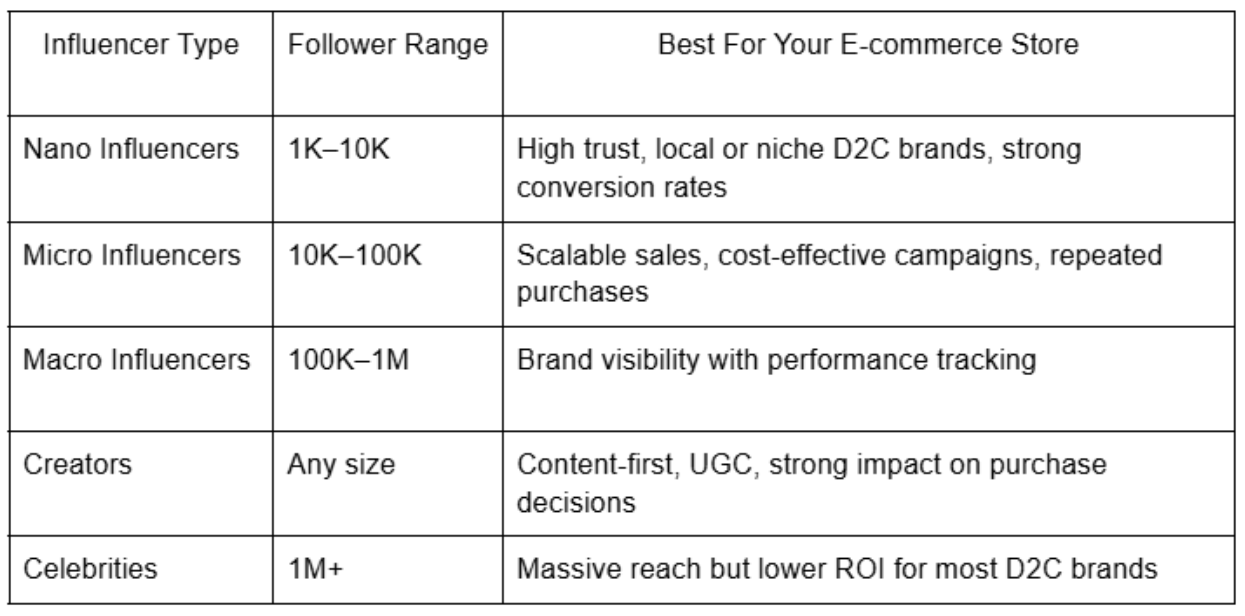
After you identify the right influencer type, you can build performance-driven campaigns that turn reach into traffic, traffic into conversions, and first-time buyers into repeat customers for your D2C brand.
As creators diversify beyond Instagram and TikTok, smart ecommerce brands are already tapping into new social media platforms shaping influencer marketing in 2026 to gain early-mover advantage.
Why Influencer Marketing Converts Better Than Ads?
You are paying more for ads while getting less attention. Rising CPMs on Facebook and Google make it harder for your D2C brand to scale profitably, and ad fatigue pushes buyers to scroll past promotions without trust. Quick commerce marketing has further raised competition for attention, as instant-delivery brands flood feeds with offers, making it even harder for traditional ads to stand out. Influencer content feels native, human, and credible, which shortens your buyer journey from discovery to checkout.
When you use ecommerce influencer marketing, creators guide your customers from awareness to conversion using real product use, reviews, and repeat mentions that ads cannot replicate. Influencer-led funnels often outperform paid ads for first-time purchases and retention, especially when your product needs trust before purchase and long-term loyalty after.
👉🏻 Need Help with social media strategy? Get Free Consultation Today!
How Social Media Drives Traffic to Your Online Store Through Influencers
You do not just get visibility from influencers, you get intent-driven traffic. Platforms like Instagram, YouTube, TikTok, and Shorts push creator content directly into discovery feeds, helping your product reach buyers who are already primed to purchase. This is exactly how social media drives traffic to online store growth for D2C brands.
Content Formats That Drive Clicks and Purchases
Before you focus on formats, you need to understand that each social platform rewards different types of influencer content, and your traffic results depend on choosing the right one for your audience.
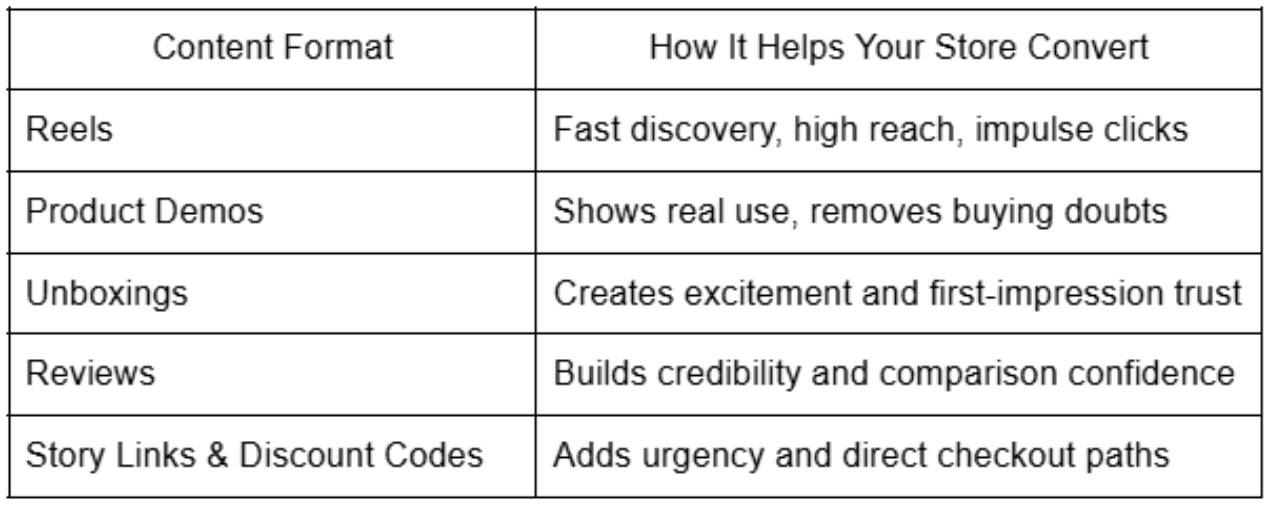
After you use these formats strategically, you turn influencer visibility into clicks, clicks into purchases, and social engagement into measurable ecommerce growth for your online store.
You benefit because influencer content uses social proof and urgency psychology that brand-created content often lacks. When buyers see real people using your product, they trust faster, click sooner, and convert at higher rates compared to polished brand ads.
Influencer campaigns drive clicks, but sustainable growth comes when you combine them with proven tactics to attract customers to your online store.
Ecommerce Influencer Marketing Funnel (From Reach to Revenue)
You grow faster when SEO and influencer content work together to attract, educate, and convert buyers at every stage. This funnel shows you how ecommerce influencer marketing turns reach into real revenue for your D2C brand.
Awareness Stage: Reach and Discovery
At this stage, influencers help you get discovered by new audiences through reels, shorts, and lifestyle content.
For example, Urban Clad partners with fashion creators who showcase outfits in daily-wear reels, driving first-touch visibility and branded search growth.
Consideration Stage: Reviews and Education
Here, your potential customers want proof and clarity before buying.
Skincare brand Biovatika uses influencers to share honest routines, ingredient breakdowns, and before-after reviews that educate buyers and reduce hesitation.
Conversion Stage: Promo Codes, UGC Ads, Influencer Landing Pages
This is where sales happen. Influencers for Doctor Moringa drive conversions using exclusive discount codes, swipe-up links, and UGC-style ads that send traffic directly to product or influencer-specific landing pages.
Retention Stage: Repeat Buyers and Brand Advocates
After purchase, influencers keep your brand top of mind through repeat mentions, reorder reminders, and community content. These long-term creator partnerships turn first-time buyers into loyal customers and vocal brand advocates who fuel repeat sales and referrals.
👉🏻 Book a Free CRO Audit of your D2C Website. Schedule a call now
How to Choose the Right Influencers for Ecommerce Brands
You do not scale profitably by chasing big numbers, you scale by choosing influencers who bring buyers, not just followers.
What to Evaluate Before Partnering With Influencers
Before you sign any influencer partnership, you need to look beyond surface-level numbers and evaluate whether the creator can actually move your ideal customers to buy.
- Audience relevance vs follower count – You win when an influencer’s audience matches your buyer persona. A smaller, niche creator with the right audience often outperforms large creators with low purchase intent.
- Engagement rate benchmarks – Aim for 3–6 percent engagement on Instagram and TikTok, and consistent comments that show real buyer interest, not generic emojis.
- Content quality and brand alignment – Choose creators whose tone, visuals, and values match your brand so their content feels natural and trustworthy to your customers.
- Platform-specific selection tips – Instagram for lifestyle and impulse buys, YouTube for education and reviews, TikTok for discovery and virality.
- Red flags to avoid – Fake followers, sudden engagement spikes, too many competing brand promotions, and no track record of driving clicks or sales.
This approach helps you build ecommerce influencer marketing campaigns that convert consistently and protect your ad spend.
Influencers bring short-term clicks, but combining their reach with a future-proof D2C ecommerce SEO strategy ensures consistent visibility and revenue.
👉🏻 Book an Expert zero-commitment Audit of Your D2C Website. Reserve your spot here
How to Measure ROI of Influencer Marketing in Ecommerce
You cannot scale what you cannot measure. ROI tracking helps you understand which influencers drive real revenue, not just engagement, so you can double down on what actually grows your ecommerce business.
Key Metrics to Track in Ecommerce Influencer Marketing
Before you look at results, you need to know which metrics actually indicate buying intent and revenue, not vanity engagement.
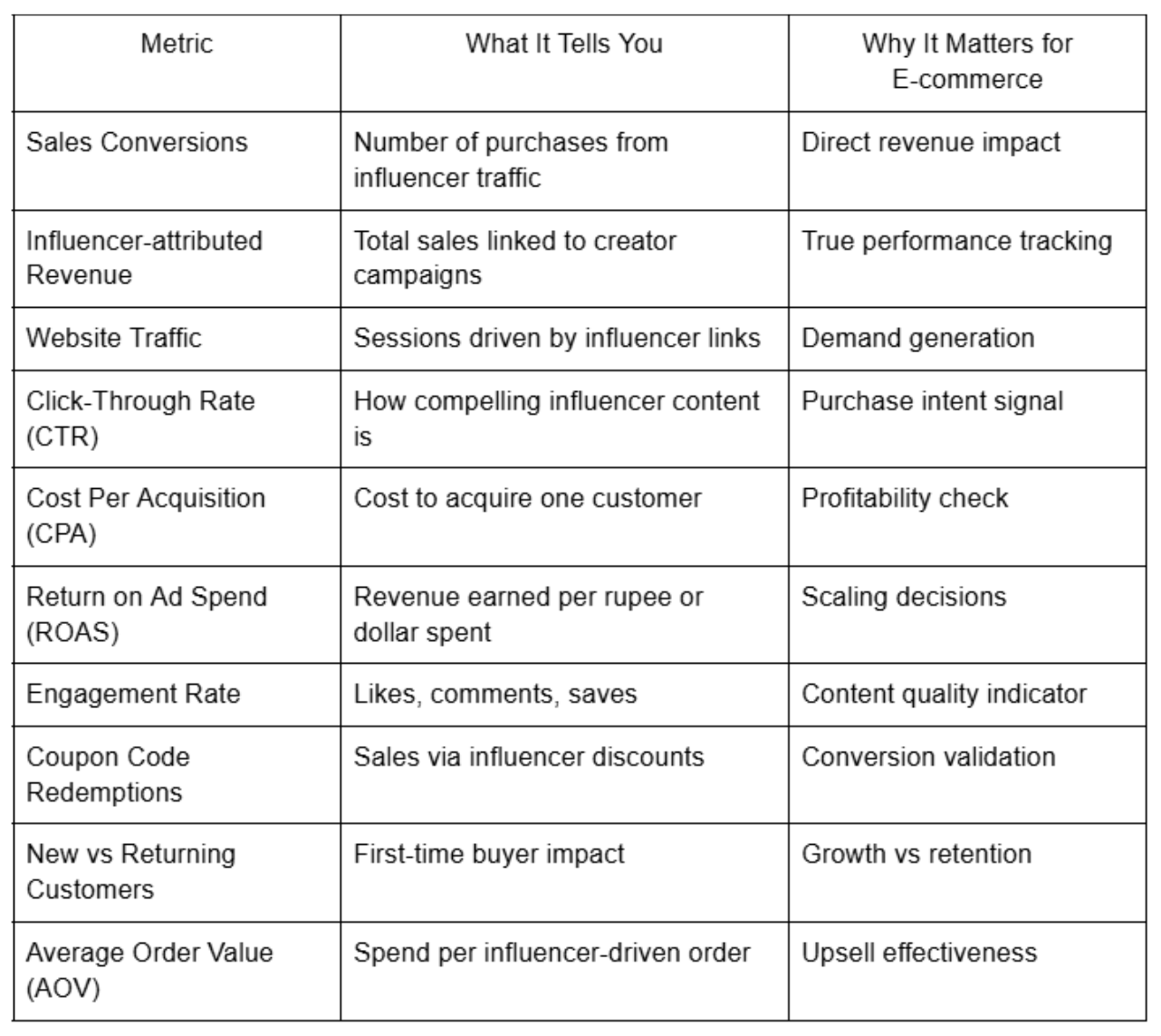
According to a 2025 report by Shopify, brands that track influencer-driven conversions and ROAS are 2.8 times more likely to scale profitable influencer campaigns compared to those measuring engagement alone.
Tools for Influencer ROI Tracking
You should use tools like affiliate dashboards, UTM links, platform analytics, and ecommerce integrations to track influencer performance accurately. Many D2C brands also rely on influencer platforms and CRM tools to connect traffic, sales, and lifetime value.
Attribution Models for Ecommerce Influencer Campaigns
You get clearer insights when you use the right attribution model. First-click helps measure discovery impact, last-click shows conversion value, and multi-touch attribution gives you the full buyer journey. For ecommerce influencer marketing, multi-touch attribution works best because influencers often influence decisions before the final purchase.
After you track these metrics consistently, you gain clear visibility into which influencers, platforms, and content formats deliver profitable ecommerce growth and repeat sales.
Growth Hack You Can Use In Paid Marketing Why UGC influencer content outperforms brand ads Using influencer content in Meta and Google Ads Whitelisting and creator licensing strategies Scaling influencer campaigns profitably give 2 examples of big brands like Adidas, boat etc.
Influencer content can spark demand, and pairing it with tactics like how to get traffic from ChatGPT helps you drive even more qualified visitors to your online store.
Growth Hack You Can Use in Paid Marketing
You grow faster when you stop running polished brand ads and start scaling UGC influencer content. Influencer-led creatives feel native, trustworthy, and relatable, which is why they consistently outperform traditional ads with lower CPA and higher ROAS.
UGC works because it looks like content your audience already consumes. When you repurpose influencer videos into Meta and Google Ads, you blend paid reach with organic trust. Whitelisting lets you run ads directly from the creator’s handle, while creator licensing gives you legal rights to scale winning creatives across platforms without reshoots.
Real world examples you can learn from:
- Adidas regularly turns athlete and creator videos into paid social ads, using real training clips and lifestyle content to drive higher engagement and conversion than studio-shot creatives.
- boAt scales influencer reels and reviews as Meta ads, combining discount-led CTAs with creator credibility to drive massive ecommerce sales during launches and festive campaigns.
When you systemize this approach, you turn influencer marketing in ecommerce into a scalable paid growth engine that compounds results instead of burning ad budgets.
👉🏻 Grow your SEO Traffic by up to 3x in 6 months. Talk to an Expert
Why You Should Hire an Influencer Marketing Agency
You lose time and money when you manage influencers in-house without systems, data, and negotiation leverage. Finding the right creators, tracking ROI, handling contracts, and scaling campaigns quickly becomes overwhelming and inconsistent for growing ecommerce brands.
When you work with a specialized ecommerce influencer marketing agency, you gain access to proven creator networks, performance tracking, and scalable frameworks that improve ROI. You should look for an agency that focuses on sales, not vanity metrics, offers transparent reporting, understands your niche, and integrates influencer campaigns with paid ads and conversion optimization.
If you’re struggling to drive repeat purchases and sustainable growth, this D2C ecommerce strategy for online sales success shows how to level up beyond one-off influencer spikes.
Why Radian Marketing Is the Best Influencer Marketing Agency for Ecommerce
Before you invest in influencer partnerships, you need a team that understands ecommerce growth, not just creator outreach.
- Ecommerce-first influencer strategy – You get strategies built around conversions, AOV, and lifetime value, not vanity reach or likes.
- D2C-focused influencer partnerships – Radian Marketing connects you with influencers who already speak to your exact buyer persona and drive purchase intent.
- ROI-driven influencer campaign execution – You track sales, CPA, and ROAS clearly, so every campaign is optimized for profitable growth.
- Paid + organic influencer funnel integration – You scale faster by turning influencer content into high-performing Meta and Google Ads while maintaining organic trust.
- Data-backed reporting and optimization – You receive transparent reports with actionable insights that help you double down on what works and cut what doesn’t.
Turn Social Media Influence Into Ecommerce Revenue
You grow faster when you stop treating influencer marketing as awareness and start using it as a revenue channel. When you combine the right creators, performance tracking, UGC amplification, paid plus organic funnels, and an engaged social media community, ecommerce influencer marketing becomes one of your most profitable growth levers.
If you want influencers to drive traffic, conversions, and repeat sales for your online store, now is the time to act.
Book a free influencer strategy call with Radian Marketing and turn social media influence into measurable ecommerce revenue.