



Key Takeaways:
- ChatGPT is an emerging referral traffic source since 2024
- Optimize for AI readability and E-E-A-T credibility.
- Create structured, fact-rich content targeting long-tail queries.
- Submit your site to GPT directories and Custom GPTs.
- Track AI-driven referrals using UTM + GA4 tools.
- Don’t over-optimize — keep your SEO human-first and helpful.
.
How to Get Traffic from ChatGPT: Get 2x Referral Traffic in 2026
The digital search landscape is evolving fast. As we move into 2026, users have already shifted from traditional search engines to AI chatbots like ChatGPT, Gemini, and Perplexity to find information, compare services, and discover products.
What does this mean for you, website owners and marketers? It means there’s a new source of traffic one that doesn’t depend on ranking #1 on Google, but on being mentioned or recommended by ChatGPT.
If you’ve ever wondered “how to get traffic from ChatGPT” or “how referral traffic from AI search works,” this guide breaks it down step by step.
You’ll learn how ChatGPT generates referral traffic, how to optimize for AI-driven visibility, and how to track and sustain this new traffic source effectively.
Does ChatGPT Matters for Your Website Traffic?
Hmm! If you’re still wondering about it, let me tell you that more than 900 millions active users already use ChatGPT weekly.
Now, you’re more interested. Right?
ChatGPT has transformed from a conversational tool into an AI discovery engine, a place where people don’t just chat, but search, shop, and explore.
When users ask questions like:
- “What are the best AI tools to plan my marketing campaigns in 2026?”
- “Can you recommend a free SEO course I can take this weekend?”
- “What’s a good platform to design social media posts other thanCanva?”
- “How do I automate bookkeeping for my freelance business?”
ChatGPT doesn’t just respond with text; it often includes clickable links to relevant sources, blogs, and brand websites.
This creates a new ecosystem of referral traffic, similar to how social media, Quora, or news features once worked.
As AI search continues to evolve, many businesses are already adapting—something we covered in our detailed guide on how AI is reshaping search and marketing in 2026.
Here’s why ChatGPT is a big deal for marketers:
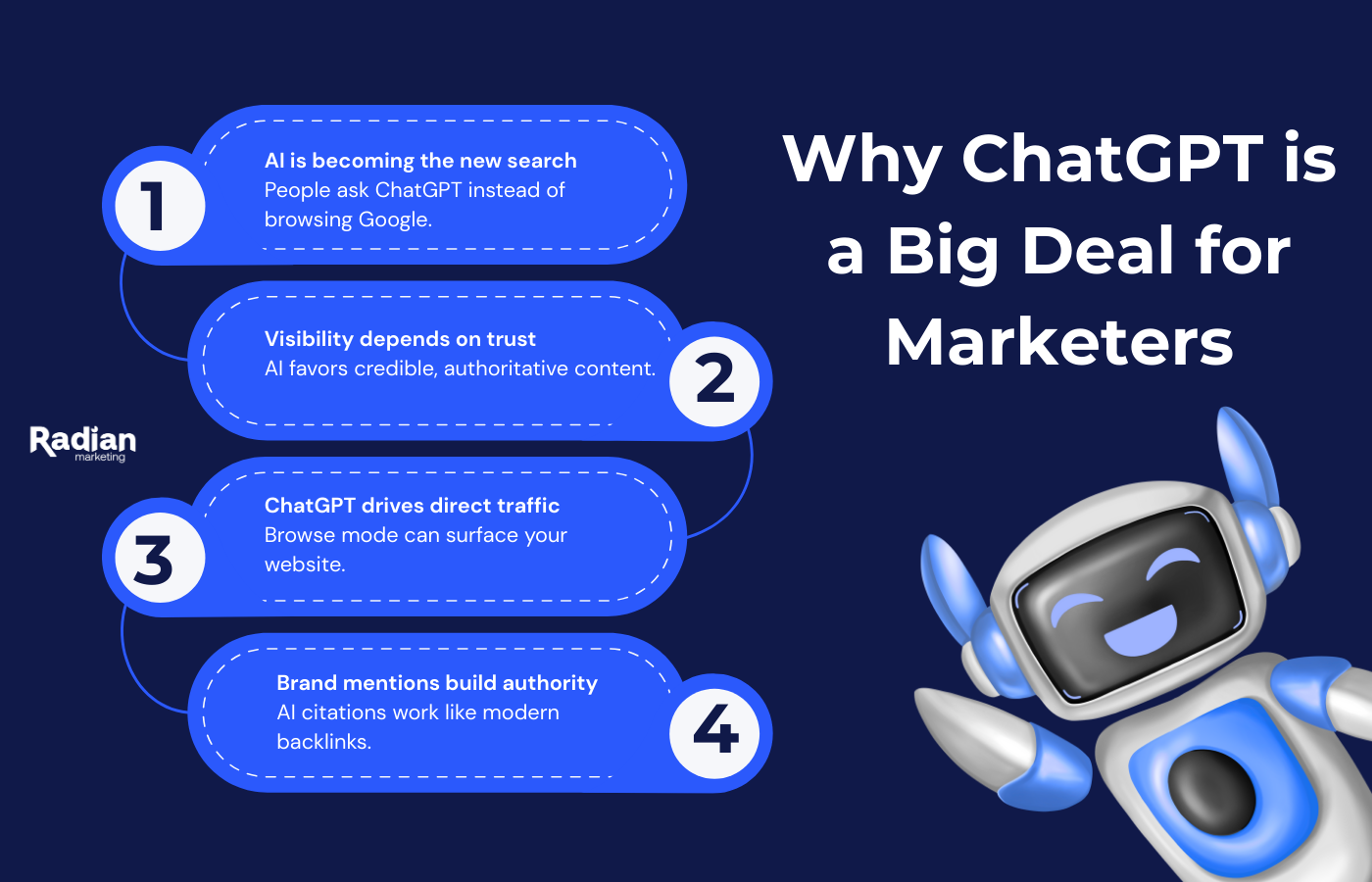
- AI-driven discovery is replacing traditional search.
People are asking ChatGPT for curated answers instead of browsing pages of Google results. - It blends content + credibility.
ChatGPT doesn’t just pick random links, it favors websites with trustworthy content, E-E-A-T alignment, and consistent visibility across the web. - ChatGPT Browse and Custom GPTs add direct traffic layers.
With browsing enabled, ChatGPT now pulls live data and can directly reference your website if it matches the query intent. - Brand mentions equal digital authority.
Being cited by ChatGPT improves both your visibility and perceived expertise; it’s the AI equivalent of earning backlinks.
If your site appears as a recommendation or data source in AI-driven results, you’ve unlocked a new channel of sustainable referral traffic.
How ChatGPT Generates Referral Traffic
When users interact with ChatGPT’s browsing or plugin-enabled models, it can pull live data from the web, suggest relevant tools or websites, and include clickable reference links. These links act as referral sources, driving real visitors to the sites mentioned in its responses.
Those links act as referral sources. When users click on them, your analytics platform (like Google Analytics or Ahrefs) records traffic from chatgpt.com similar to referral visits from LinkedIn, Medium, or Reddit.
For Example – A user asks ChatGPT: “What’s the best digital marketing agency?”
ChatGPT may respond with: “You can check Radian Marketing, which offers SEO, PPC, and content services tailored for local European businesses.”
Each mention like this can drive AI-originated referral traffic, and if repeated across multiple contexts, it can turn into a consistent discovery source especially for SaaS tools, agencies, or ecommerce platforms.
Optimize Your Content to Appear in ChatGPT Responses
Now comes the million-dollar question: how do you get ChatGPT to actually notice your content?
Unlike Google, which relies on complex algorithms and backlinks, ChatGPT looks for clear, well-structured, and trustworthy information it can easily understand and summarize. In simple terms, your goal is to make your content so readable and reliable that the AI naturally picks it up when answering user queries.
Let’s go step by step.
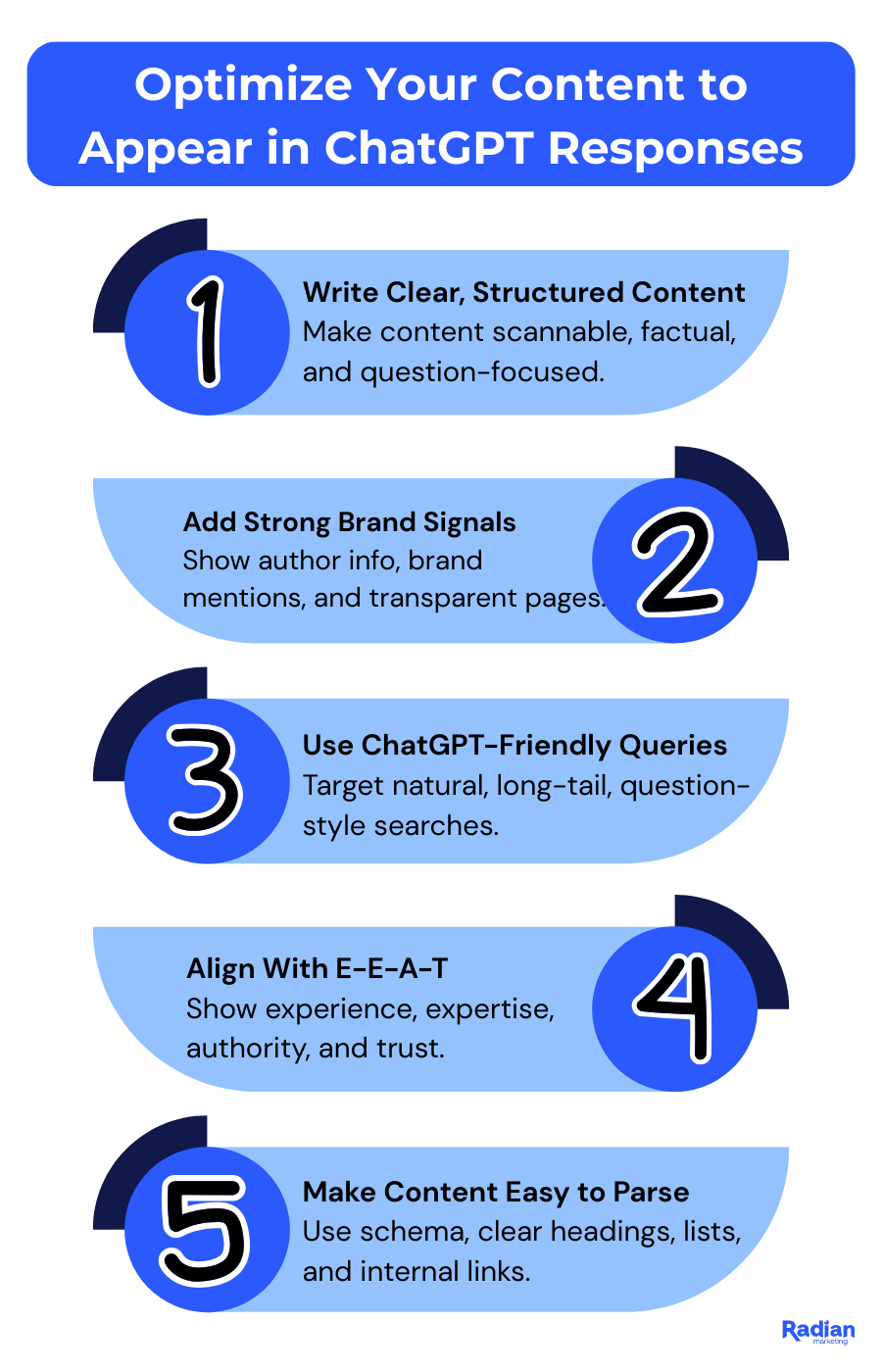
1. Write Structured and Factual Content
ChatGPT extracts answers directly from your content. That means your writing needs to be:
- Straightforward and scannable (short paragraphs, clear headers, bullet points).
- Question-oriented, answering common queries directly.
- Factual and specific, with examples and data wherever possible.
For instance, a heading like:
“How to Get Referral Traffic from ChatGPT?”
…is more likely to be picked up by the browsing model than a vague title like “Using AI for traffic growth.”
2. Add Clear Brand Mentions and Author Information
AI models reward transparency and accountability. Add:
- Author bios with credentials
- Contact or About pages
- Mentions of your brand within the content
This helps establish entity association, making it easier for ChatGPT to recognize your business as a reliable source.
3. Use ChatGPT-Friendly Keywords and Queries
Instead of targeting high-volume, competitive terms, focus on natural question-style and long-tail keywords that match conversational searches.
Examples:
- best skincare routine for acne-prone skin
- how to get glowing skin naturally with vitamin C serum
- which moisturizer is best for dry skin in winter
Each of these reflects the kind of real, conversational queries users type into ChatGPT when looking for skincare advice or product recommendations, making your content more discoverable in AI-driven searches. And as this shift toward AI-powered discovery grows, more brands are also adopting AI automation and agent services to handle customer queries, personalize recommendations, and scale content support.
4. Align Your Content with E-E-A-T
ChatGPT values Experience, Expertise, Authoritativeness, and Trustworthiness the same principles Google emphasizes.
Here’s how to apply it:
- Experience: Include case studies or real-world results.
- Expertise: Write from professional authority, not speculation.
- Authoritativeness: Build backlinks and citations from credible sites.
- Trustworthiness: Use SSL, visible policies, and consistent brand tone.
A ChatGPT-friendly site reads like an expertly written knowledge hub not keyword-stuffed filler.
Example – If you own an accounting firms in Dubai (UAE), apply E-E-A-T by showcasing client success stories, publishing expert-reviewed content on topics like VAT or AML, and earning backlinks from credible financial sites. Display trade licenses, SSL security, and transparent pricing to build trust. This positions your firm as a reliable financial authority that ChatGPT can confidently recommend.
5. Make Content Easy for ChatGPT to Parse
The browsing model looks for structured data. Use:
- Schema markup (FAQ, article, how-to)
- Bullet lists and tables
- Headings (H2, H3) with descriptive text
- Internal linking for context
This increases your chances of being cited directly in AI summaries.
Example – For an eCommerce brand, make content easy for ChatGPT to understand by adding Product and FAQ schema, using clear headings like “Best Handcrafted Quilts for Summer,” and including comparison tables or bullet lists for product features.
Link related pages such as Quilts, Cushions → Throws to create context.
This structured format helps ChatGPT recognize and recommend your store in AI-driven product suggestions.
If you want to see how AI is already transforming product discovery and shopping behavior, you’ll love our breakdown of ChatGPT’s instant checkout and AI-powered shopping experience, which shows exactly where eCommerce is heading next.
Get Featured in ChatGPT Custom GPTs & Plugins
One of ChatGPT’s most powerful features is its Custom GPTs niche AI assistants that recommend tools, products, and websites. You can use them to boost visibility and traffic by:
- Partnering with GPT creators in your niche to feature your brand or services.
- Listing your business in GPT directories like GPTs Directory or AI Tool Tracker.
- Building your own branded GPT that links directly to your website or products.
These GPTs work like AI app stores, helping users discover and visit your site through trusted recommendations.
Leverage ChatGPT for Content Promotion
ChatGPT can be a great content promotion tool to expand your reach and boost engagement. Use it to:
- Create Quora or Reddit posts that naturally reference your website or blog.
- Write optimized blog snippets, FAQs, or summaries for better AI visibility.
- Draft outreach emails or guest post ideas to earn quality backlinks.
- Generate social media captions or short posts to make your content shareable.
Pro Tip: Use tools like SurferSEO or Clearscope to keep AI-generated content SEO-friendly.
When paired with targeted social media advertising, these content strategies can dramatically accelerate your brand’s reach and conversions.
Monitor and Track ChatGPT Referral Traffic
Tracking traffic from ChatGPT is still new, but with the right setup, you can easily see how users arrive from AI-powered platforms.
Here’s how to do it step by step:
1. Add UTM parameters to any links you share or test through ChatGPT.
Example:
https://yourwebsite.com/blog/ai-seo-tips?utm_source=chatgpt&utm_medium=referral
2. Once you’ve added UTM parameters to your links (like ?utm_source=chatgpt&utm_medium=referral), it helps Google Analytics (GA4) recognize that the visitor came from ChatGPT. Without these tags, GA4 usually counts those visits as “Direct traffic,” which means you wouldn’t know they actually came from ChatGPT.
3. Open Google Analytics (GA4) and go to Reports → Acquisition → Traffic acquisition.
This report shows where your website visitors are coming from.
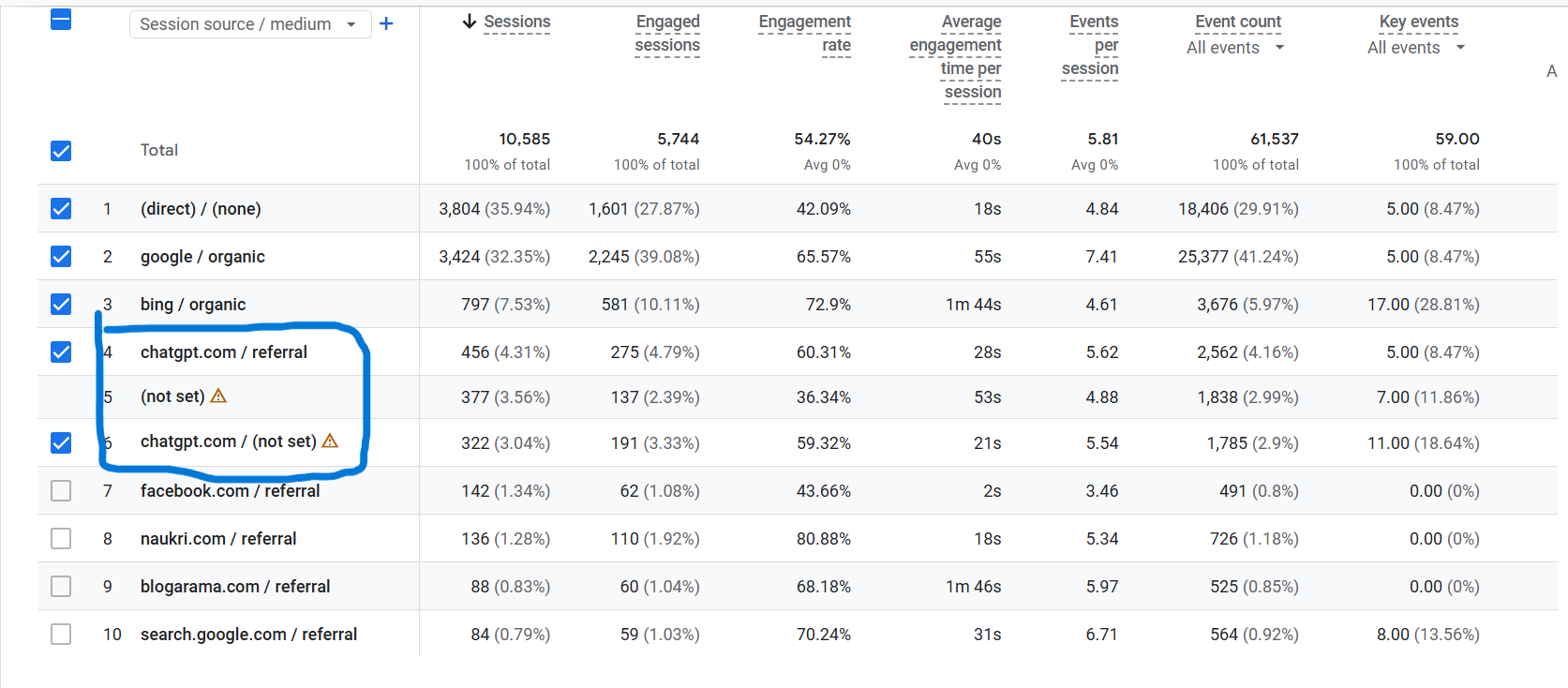
In the Session source/medium table, look for entries like:
- chatgpt.com / referral
These lines confirm that visitors clicked a link to your site from ChatGPT—either through a recommendation, plugin, or browsing result.
👉 For example, if you see “chatgpt.com / referral” with 25 sessions, it means 25 people landed on your website after ChatGPT mentioned or linked to your page.
4. Use AI visibility tools like SimilarWeb AI Insights or Ahrefs Labs to detect when your domain is mentioned in AI-generated answers or ChatGPT summaries.
5. Create a custom segment in GA4 to filter users who came from ChatGPT referrals. This lets you measure their engagement, time on site, and conversions, helping you understand which pages (like blogs or tools) perform best with AI-driven audiences.
By setting this up, you’ll have clear data showing how ChatGPT contributes to your overall traffic perfect for presentations, reports, or content audits.
Common Mistakes to Avoid
While optimizing for AI traffic, many marketers fall into avoidable traps. Here are the top ones to steer clear of:
- Keyword stuffing: AI models prefer natural, context-rich writing.
- Neglecting content updates: ChatGPT favors recent and relevant data.
- Ignoring user intent: Don’t just aim to appear in responses that provide genuine value.
- Depending solely on AI visibility: Continue optimizing for Google and social media too.
Remember: ChatGPT traffic should complement your overall SEO strategy, not replace it.
Conclusion
The rise of ChatGPT marks a turning point in how websites attract visitors. Traditional SEO still matters, but AI discoverability is now a major growth driver.
To get traffic from ChatGPT:
- Create structured, factual, and expert-driven content.
- Build visibility through Custom GPTs and plugins.
- Track referral performance using UTM tags and GA4 insights.
- Keep optimizing with the E-E-A-T + AEO approach.
In 2026, visibility isn’t just about ranking, it’s about being recommended by AI. Start optimizing now, and position your brand for the future of search.